
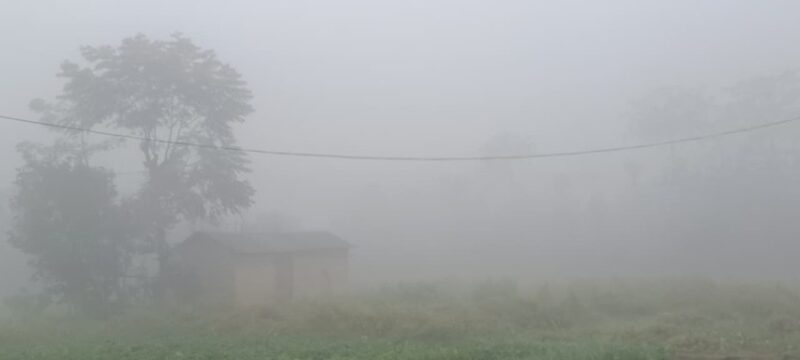
Bihar continues to reel under severe cold and dense fog, disrupting normal life across the state. The India Meteorological Department has issued an Orange Alert for all 38 districts. The alert warns of persistent dense fog and cold day conditions till January 10. Weather conditions are expected to remain harsh during mornings and evenings.
Patna emerged as the coldest city in Bihar over the last 24 hours. The city recorded a very small gap between day and night temperatures. The difference between minimum and maximum temperatures narrowed to just 3.6 degrees Celsius. Such conditions reflect the severity of the ongoing cold spell.
While Dehri and Banka recorded the highest maximum temperature of 20.6 degrees Celsius, nights remained cold there. Both locations reported a minimum temperature of 11.5 degrees Celsius. Sabour in Bhagalpur district recorded the lowest minimum temperature in the state. The mercury there dropped to 6.4 degrees Celsius, intensifying cold conditions.
Cold Wave Likely to Intensify Across Bihar
According to IMD officials, the cold spell is expected to strengthen further in coming days. Cold wave conditions may gradually develop across several districts. The prolonged cold is likely to continue till January 10. Residents are expected to face increased discomfort, especially during early mornings and late evenings.
Meteorologists have advised people to remain cautious during this period. The combination of low temperatures and dense fog can impact health and mobility. Elderly citizens, children, and those with existing illnesses remain most vulnerable.
Dense Fog Affects Visibility and Road Safety
Dense fog covered Patna and several parts of southwest and north Bihar on Sunday morning. Visibility remained poor till nearly 9 am in many districts. In some areas, fog persisted throughout the day, blocking sunlight completely.
Poor visibility has also raised concerns over road safety. In Jamui district, a bus carrying pilgrims collided with a truck at Khaira market. All passengers were reported safe, though some suffered minor injuries. Dense fog reportedly reduced visibility at the time of the accident.
Forbesganj recorded the lowest visibility in the state. Visibility there dropped to just 50 metres due to thick fog. Similar conditions were reported from several other regions, affecting vehicular movement on highways and rural roads.
Cold Westerly Winds Increase Chill Factor
Weather experts have attributed the sharp temperature drop to snowfall in the upper Himalayan region. Cold westerly winds from Rajasthan are also playing a major role. These winds are sweeping across Bihar, bringing freezing air masses.
Higher wind speeds have worsened the chill factor across districts. People are finding it difficult to step outdoors for long durations. Markets and public places have witnessed reduced footfall due to the biting cold.
On Saturday, Patna did not receive any sunshine throughout the day. The maximum temperature fell sharply to 14.4 degrees Celsius. A day earlier, the maximum temperature stood at 19.6 degrees Celsius. The minimum temperature rose slightly to 10.8 degrees Celsius, adding to discomfort.
Schools Closed in Patna Due to Severe Cold
Considering the prevailing weather conditions, the Patna district administration took precautionary measures. District Magistrate Dr Tyagarajan SM ordered the closure of all schools up to Class 8. The order includes government and private schools, pre-schools, and anganwadi centres.
Schools will remain closed till January 8 to safeguard children’s health. Authorities have advised parents to avoid exposing children to cold weather. Educational activities may resume once weather conditions improve.
Health Emergencies Rise in State Capital
The extreme cold has triggered a rise in health emergencies in Patna. Major government hospitals are witnessing a surge in critical cases. Doctors are reporting an increase in heart attack, brain haemorrhage, and COPD cases.
Hospitals such as PMCH and IGIMS are operating under heavy pressure. ICUs, HDUs, and emergency wards are running at full capacity. Several patients are being treated on trolleys due to lack of beds. Some critical patients are being referred to private hospitals.
Medical experts say heart attack and brain haemorrhage cases have risen by nearly 30 percent. At IGIMS, Superintendent Dr Manish Mandal stated that 15 patients died in the last three days. Around 25 patients are currently undergoing treatment for similar conditions.
At IGIC, Dr Amitabh reported more than 120 admissions in three days. Over 10 deaths have also been recorded during this period. Doctors attribute the rise to sudden blood pressure fluctuations caused by cold weather.
Doctors Explain Health Risks During Cold Wave
Doctors explained that low temperatures cause blood vessels to constrict rapidly. This leads to a sudden increase in blood pressure. Such changes can trigger strokes, heart attacks, or respiratory complications.
People with existing heart conditions, diabetes, or lung diseases are at higher risk. Doctors have advised regular monitoring of blood pressure during cold spells. Adequate warmth and timely medical attention remain crucial.
The demand for home-care medical equipment has increased sharply. Oxygen concentrators, heaters, and nebulisers are seeing higher demand. Medical suppliers report a nearly 50 percent surge in requirements, leading to shortages.
Cold Day Conditions Reported in 25 Districts
Cold day conditions were reported in at least 25 districts across Bihar. Strong winds combined with fog intensified the cold impact. Several districts did not receive any sunlight throughout the day.
IMD defines a cold day when the daytime temperature falls significantly below normal. Absence of sunshine also contributes to the classification. As per IMD norms, a maximum temperature of 16 degrees Celsius or lower qualifies as a cold day.
Many districts met these criteria over the last two days. Continuous cloud cover and fog have prevented surface heating. This has resulted in prolonged cold conditions during daytime hours.
Understanding Cold Day and Cold Wave Conditions
A cold day refers to unusually cold daytime conditions. It occurs when maximum temperatures remain far below seasonal averages. Lack of sunshine worsens the effect on human comfort.
A cold wave refers to extremely low night-time temperatures. It is declared when minimum temperatures drop to 4 degrees Celsius or lower. It can also be declared when temperatures fall 4 to 6 degrees below normal levels.
Cold waves lead to intense chill during mornings and evenings. Combined cold day and cold wave conditions increase health risks significantly.
IMD Advises Caution Over Next Few Days
The India Meteorological Department has warned that similar weather may continue. Dense fog and cold day conditions are likely over the next few days. People have been advised to avoid unnecessary travel during early hours.
IMD has urged residents to take adequate precautions against cold. Wearing warm clothing, avoiding exposure, and staying hydrated remain important. Motorists have been advised to drive cautiously in foggy conditions.
As Bihar braces for continued cold, authorities remain on alert. Health services and district administrations are monitoring the situation closely. Weather updates will be issued regularly as conditions evolve.