

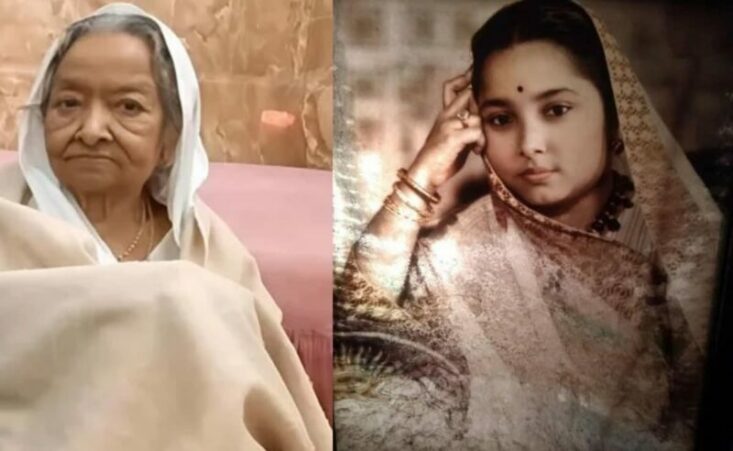
The Darbhanga Raj family holds a distinguished place in India’s social and national history. Known for its role during crucial moments, the family contributed generously during times of national crisis. Spread across nearly 8,380 square kilometers in the Mithila region of Bihar, Darbhanga Raj had its headquarters in Darbhanga city. The estate was established in the early sixteenth century by Maithil Brahmin landlords.
People closely associated with the Darbhanga Raj recall its unmatched patriotism. During the 1962 India-China war, the royal family was among the first to support national defense. At Darbhanga’s Indra Bhavan ground, around 15 maunds of gold, weighing nearly 600 kilograms, were donated for the country. Along with gold, the family handed over three private aircraft to the government.
Contribution to Infrastructure and Education
The royal family also donated its private airport, spread over 90 acres, to the government. Today, the same land hosts the Darbhanga Airport. Historians and local scholars highlight the family’s remarkable contribution to education and the freedom movement.
For the construction of Banaras Hindu University, the Darbhanga Raj donated fifty lakh rupees. To preserve ancient knowledge systems, the family donated its residential campus, which later became a Sanskrit university. This campus remains unique, as two universities operate within the same premises.
Support for Science and Rail Development
Darbhanga Raj also supported scientific advancement. Nobel Prize-winning scientist C. V. Raman received a precious diamond from the family to aid his research. In 1874, a private railway line was laid inside the Darbhanga estate.
A 55-mile rail section from Wajitpur to Nargauna Terminal was completed in just 62 days, creating a world record. For this purpose, the Tirhut Railway Company was established, with its headquarters at Moti Mahal. This railway line transformed the Mithila region by boosting trade and employment.
Railway Innovations and Historical Journeys
The Darbhanga rail line introduced several innovations. It became the first railway route in the country to provide toilet facilities in third-class coaches. The construction responsibility was given to an English company, while telegraph wiring contracts were awarded to Rameshwar Singh, also known as Langat Singh.
In 1883, the Viceroy of India made his first official journey by rail saloon from Kolkata to Darbhanga. His special saloon reached Nargauna Terminal, marking a historic moment. Over the years, this terminal hosted many national leaders, scholars, and industrialists.
Gandhi’s Visit After the 1934 Earthquake
The 1934 earthquake brought Mahatma Gandhi’s Bihar visit into controversy. Protests erupted across the state, leading the Darbhanga district administration to initially stop Gandhi from visiting the city. When Maharaja Kameshwar Singh learned of this, he personally guaranteed Gandhi’s safety.
Gandhi was invited to Darbhanga under royal assurance. The Maharaja entrusted security arrangements to his manager Denby and assigned his younger brother to oversee Gandhi’s stay. Gandhi’s train was brought directly to Nargauna Terminal, where heavy security arrangements were made.
Maharani Adhirani Kamsundari Devi and Royal Traditions
Maharani Adhirani Kamsundari Devi held a special place in the Darbhanga Raj lineage. According to royal family member Kumud Singh, she was the last surviving woman in the country to hold the title of Maharani Adhirani. The name Kamsundari was given by the Darbhanga Raj family, while her birth name was Kalyani.
Royal traditions dictated specific names for queens. The first queen was called Lakshmi, the second Priya, and the third Kama. This tradition followed Sanatan customs, where multiple marriages were socially accepted. Maharani Kamsundari Devi lived at Kalyani Niwas, provided by Maharaja Kameshwar Singh.
Life of Simplicity and Grace
At Kalyani Niwas, members of her maternal family took care of her. Her grandson Kumar Kapileshwar Singh described her as a symbol of simplicity, dignity, compassion, and grace. Despite living amid immense wealth, she remained grounded and deeply connected to society.
Her life reflected discipline, restraint, and silent devotion. She upheld royal traditions while maintaining sensitivity toward public life. Family members Kumar Ratneshwar Singh and Kumar Rajeshwar Singh said her passing felt like the departure of a quiet yet powerful consciousness.
Trustee of Bihar’s Largest Religious Trust
Kumud Singh stated that Maharani Adhirani Kamsundari Devi was the last surviving trustee of the Kameshwar Singh Religious Trust. This trust is considered the largest religious trust in Bihar. At present, the trust owns nearly one lakh acres of land and gold valued at around two thousand crore rupees.
The trust also manages 108 temples across India and abroad. One of these temples is located in Pakistan. Land donations were made to ensure the smooth functioning of these temples. Two trustees of the trust had passed away earlier.
Darbhanga Royal Family Assets and Future Management
Sources from the royal family reveal that Darbhanga Raj currently owns assets exceeding ten thousand crore rupees. This includes properties under the Kameshwar Singh Religious Trust and private holdings. The family owns land in several parts of the country.
With the passing of Maharani Kamsundari Devi, new trustees will now take responsibility for managing the trust’s assets. The transition is expected to follow established legal and traditional frameworks.
Commitment to Social Welfare
Maharani Kamsundari Devi was widely respected for her philanthropic work. In memory of her husband Maharaja Kameshwar Singh, she established the Maharajadhiraj Kameshwar Singh Kalyani Foundation. Through this foundation, several initiatives were undertaken in education, healthcare, and social service.
These efforts benefited weaker sections of society and reflected the royal family’s long-standing commitment to public welfare. Her charitable work continued quietly, without publicity or personal recognition.
Birth, Marriage, and Family Background
Maharani Kamsundari Devi was born on October 22, 1932, in Mangrauni village of Madhubani district. She was the fourth daughter of Pandit Hansmani Jha. Her marriage took place on May 5, 1943.
She was the third wife of Maharaja Kameshwar Singh. His first wife Maharani Rajlakshmi and second wife Maharani Kameshwari Priya had passed away earlier. Her life remained closely tied to royal responsibilities and social service.
Leaders Pay Tribute to the Maharani
Following news of her demise, several prominent figures paid tribute. From the state government, Industry Minister Dilip Jaiswal and Social Welfare Minister Madan Sahni expressed condolences. District Magistrate Kaushal Kumar also paid homage.
Academicians and scholars joined in remembrance. Sanskrit University Vice Chancellor Professor Lakshmi Niwas Pandey and Registrar Professor Brajeshpati Tripathi offered tributes. Former Vice Chancellor Pandit Ramchandra Jha, Pandit Shashinath Jha, and Dr. A. P. J. Abdul Kalam WIT Director Professor Ajaynath Jha were among those who remembered her legacy.
Maharani Adhirani Kamsundari Devi’s life remains a chapter of dignity, tradition, and service. Her legacy continues through institutions, trusts, and values that shaped Bihar’s cultural and social landscape.
Share this:
- Click to share on WhatsApp (Opens in new window) WhatsApp
- Click to share on Facebook (Opens in new window) Facebook
- Click to share on Threads (Opens in new window) Threads
- Click to share on Reddit (Opens in new window) Reddit
- Click to share on Telegram (Opens in new window) Telegram
- Click to share on X (Opens in new window) X
- Click to share on LinkedIn (Opens in new window) LinkedIn