
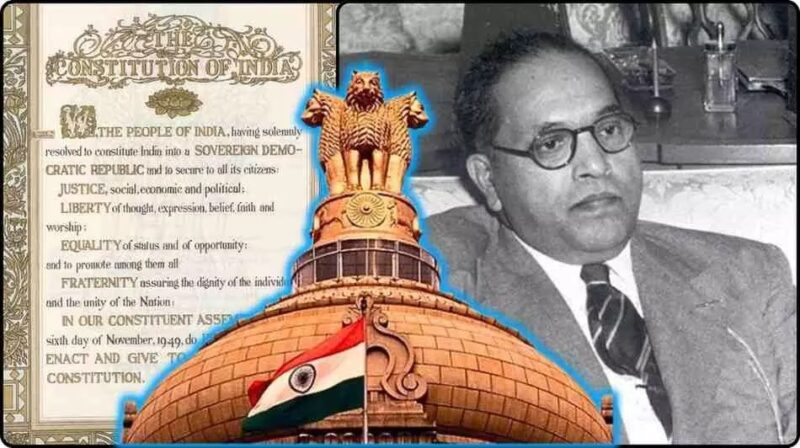
India’s Constitution was formally adopted on November 26, 1949, yet it came into effect on January 26, 1950. This difference in dates raises a common question: Why was the Constitution implemented on January 26, despite it being ready on November 26? Over the years, this date has evolved into Constitution Day, a day dedicated to remembering the importance of India’s Constitution, the justice system, and citizens’ rights.
November 26: A Historic Day for Indian Democracy
November 26 holds great historical significance in India. It is not just another date on the calendar, but a day that marks the foundation of India’s democracy. The adoption of the Indian Constitution by the Constituent Assembly on this day laid the groundwork for India’s transition to a republic. The day is commemorated every year to honor the importance of the Constitution, and to remind citizens of their rights under the law.
Before it was officially declared as Constitution Day, November 26 was celebrated as National Law Day. This was done to honor the importance of legal awareness and the role of the law in the democratic framework of India. The Indian government, however, officially declared this day as Constitution Day in 2015 under the leadership of Prime Minister Narendra Modi.
The Making of the Constitution
The Indian Constitution was completed and adopted by the Constituent Assembly on November 26, 1949. However, it did not come into effect immediately. The actual implementation was scheduled for January 26, 1950, a date of great symbolic significance. This was the day when India formally became a republic, granting equal rights and justice to all its citizens. While the document was ready, it took a few more months for the Constitution to be fully integrated into the functioning of the nation.
Why Was the Constitution Implemented on January 26?
Though the Constitution was finalized on November 26, 1949, the decision to implement it on January 26, 1950, was a deliberate choice. This date had already held historical importance as it was on January 26, 1930, that the Indian National Congress adopted the declaration of full independence, or “Purna Swaraj.” This declaration marked a pivotal moment in India’s struggle for independence. On this day, the Indian national flag was raised for the first time, symbolizing the country’s commitment to self-rule. Therefore, to honor the significance of this date, the Indian government chose January 26 to implement the Constitution and to declare it as Republic Day, marking the country’s transformation into a democratic republic.
National Law Day Becomes Constitution Day
Initially, November 26 was observed as National Law Day to mark the adoption of the Indian Constitution. The idea for this observance was first proposed in 1979 by Dr. L.M. Singhvi, a former Member of Parliament and a respected legal expert. Singhvi suggested that November 26 be celebrated as National Law Day, and the proposal was accepted. For several decades, this day continued to be celebrated as National Law Day, emphasizing the importance of the legal system in India.
However, in October 2015, Prime Minister Narendra Modi announced that November 26 would no longer be observed as National Law Day but would be re-designated as Constitution Day. This decision was made to honor Dr. B.R. Ambedkar, who is regarded as the principal architect of the Indian Constitution. Following the Prime Minister’s announcement, the Indian government issued an official Gazette notification on November 19, 2015, officially marking November 26 as Constitution Day.
The Journey of India’s Constitution
India’s Constitution, considered one of the longest and most detailed constitutions in the world, took a remarkable 2 years, 11 months, and 18 days to draft. It was a comprehensive document that provided a framework for governance, justice, and the rights of the people. What is even more remarkable is that the entire Constitution was hand-written. Dr. B.R. Ambedkar is widely recognized as the “Father of the Indian Constitution,” but the task of drafting the Constitution was carried out by calligrapher Prem Behari Narain Raizada. Raizada, known for his impeccable handwriting, did this monumental work without charging a single penny. His contribution to the writing of India’s Constitution remains a symbol of dedication to the nation.
Constitution Day Celebrations and Reflections
Constitution Day is now observed annually across India, with various events held to commemorate the significance of the Constitution. The day is marked by discussions, seminars, and activities focusing on the Constitution’s principles, including justice, equality, and human rights. Schools, colleges, and government institutions hold programs to educate the public about the Constitution and its impact on Indian society. It is a day to reflect on the values enshrined in the Constitution and to reaffirm the commitment to uphold those values in everyday life.
As the country celebrates Constitution Day, it is important to remember the democratic ideals that the Constitution represents. It is not just a legal document but a living testament to the vision of India’s leaders who sought to create a just, inclusive, and democratic society. The Constitution guarantees fundamental rights to every Indian citizen and provides the legal foundation for all governance and societal functions in the country.
November 26 is a day that marks the triumph of democracy and the rule of law in India. The Constitution, adopted on this date, continues to be the guiding force in the nation’s governance. Although the Constitution came into effect on January 26, 1950, it was on November 26, 1949, that the groundwork for India’s democratic republic was laid. Constitution Day serves as a reminder of the hard work and vision that went into creating India’s Constitution, and it emphasizes the importance of upholding democratic values in every aspect of life. This day is not just a celebration of India’s legal system but a reaffirmation of the country’s commitment to justice, equality, and democracy.
Share this:
- Click to share on WhatsApp (Opens in new window) WhatsApp
- Click to share on Facebook (Opens in new window) Facebook
- Click to share on Threads (Opens in new window) Threads
- Click to share on Reddit (Opens in new window) Reddit
- Click to share on Telegram (Opens in new window) Telegram
- Click to share on X (Opens in new window) X
- Click to share on LinkedIn (Opens in new window) LinkedIn