

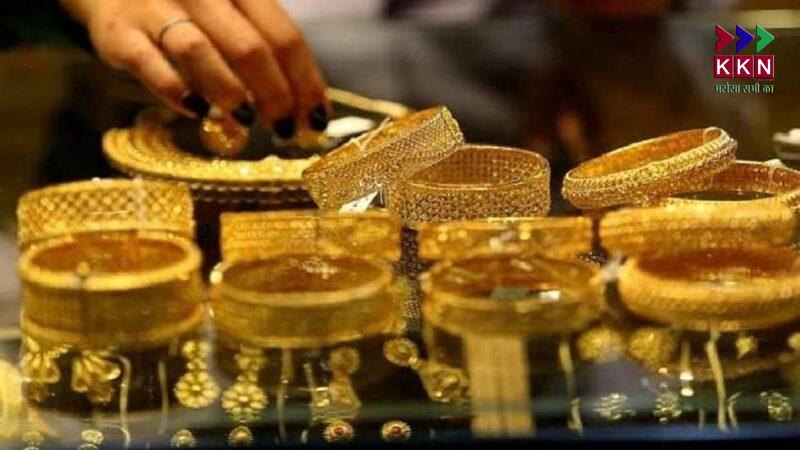
India, among the world’s largest gold markets, is seeing a clear shift in buying patterns.
Gold prices are heading toward their biggest annual rise in 46 years.
This surge is reshaping how Indian consumers purchase the precious metal.
Traditional jewellery buying is gradually losing ground.
Small gold coins and bars are gaining popularity across urban and semi-urban markets.
For generations, gold jewellery symbolised wealth, tradition, and celebration in Indian households.
Weddings, festivals, and family events revolved around jewellery purchases.
However, record prices are forcing buyers to reconsider long-standing habits.
Affordability has become a central concern for many families.
Festive Purchases Reflect Changing Priorities
For nearly two decades, Mumbai homemaker Prachi Kadam followed a festive tradition.
She bought gold jewellery every year during auspicious occasions.
Her choices balanced personal style with cultural beliefs.
This year, rising prices changed her approach.
Instead of necklaces or bangles, she bought a 10-gram gold coin.
She explained that jewellery remains useful for social events.
However, high making charges feel difficult to justify now.
Making charges often add nearly 15 percent to the final cost.
Like millions of Indians, Kadam believes festive gold purchases bring good fortune.
Still, budget pressure influenced her final decision.
A gold coin offered value without extra expenses.
Her experience reflects a growing national trend.
Record Prices Drive a Structural Market Shift
This change mirrors a broader transformation across India’s gold market.
Prices are nearing their strongest annual growth in nearly five decades.
As a result, consumer priorities are evolving rapidly.
Jewellery demand is weakening, while investment demand is rising.
Gold continues to hold deep cultural value in India.
Yet, high prices are redefining ownership preferences.
Smaller denominations allow buyers to stay invested in gold.
They avoid heavy additional costs linked to jewellery.
Coins and bars provide flexibility and easier resale options.
This appeals to households seeking financial security.
The shift marks a balance between tradition and modern financial planning.
Global Factors Fuel the Price Rally
Several global factors are driving gold prices higher.
Demand for safe-haven assets has strengthened worldwide.
Expectations of US interest rate cuts added further support.
A weakening dollar also boosted gold’s appeal.
Global gold prices have risen around 67 percent this year.
On December 26, prices touched a record $4,549.7 per troy ounce.
This rally intensified price pressure in domestic markets like India.
Gold’s global momentum directly impacts Indian consumers.
International prices often dictate local market trends.
Higher global rates translate into costlier domestic purchases.
Rupee Weakness Adds to Domestic Pressure
The Indian rupee weakened nearly five percent against the dollar this year.
Currency depreciation amplified domestic gold prices further.
As a result, Indian gold prices surged by nearly 77 percent.
This performance outpaced most traditional investments.
The Nifty 50 index gained only 9.7 percent during the same period.
Gold emerged as one of the top-performing assets for households.
Such strong returns reinforced gold’s reputation as a safe investment.
At the same time, high prices discouraged heavy jewellery buying.
Consumers began adjusting quantities and product choices.
Buyers Adapt Without Abandoning Jewellery
Market analysts believe this shift is limiting an overall demand decline.
The trend may continue well into 2026.
Globally, rising bullion prices are weakening jewellery consumption.
Many buyers are not abandoning jewellery completely.
Instead, they are choosing lighter designs or smaller weights.
This approach preserves tradition while managing affordability.
Households are becoming more selective with purchases.
They prioritise value and long-term utility.
Gold ownership remains important, but spending patterns are evolving.
Lightweight Jewellery Gains Wider Acceptance
Kolkata resident Nibedita Chakravarti changed her buying strategy this year.
Her household budget struggled to match rising gold prices.
She now prefers lighter jewellery designs.
Reducing weight by six or seven grams makes a major difference.
Such changes can save over 100,000 rupees.
Weight-conscious buying is becoming common among middle-income families.
Jewellers report increasing demand for minimalist designs.
Customers ask for thinner chains and lighter bangles.
The focus has shifted from quantity to practicality.
Design and Value Shape Purchase Decisions
PN Gadgil Jewellers Chairman Saurabh Gadgil observed evolving preferences.
Buyers are becoming more design-focused and price-aware.
Value for money now plays a critical role in decisions.
The company launched a new sub-brand in June.
It focuses on lighter and lower-carat jewellery options.
Modern craftsmanship is redefining lightweight jewellery’s appeal.
According to Gadgil, buyers want gold ownership without financial strain.
Lightweight designs no longer feel basic or entry-level.
They combine affordability with contemporary aesthetics.
Gold Demand Shows Mixed Trends
Data from the World Gold Council highlights shifting demand patterns.
India’s total gold demand fell 14 percent year on year.
This decline occurred during the first nine months of 2025.
Jewellery consumption dropped sharply by 26 percent.
It fell to 278 metric tons during the period.
In contrast, investment demand rose by 13 percent.
Investment volumes reached 185 metric tons.
Investment accounted for a record 40 percent of total demand.
This underscores gold’s role as a wealth-preservation asset.
Investment Appetite Remains Strong
India Bullion and Jewellers Association President Prithviraj Kothari expects continuity.
He believes the investment shift will persist through 2026.
Gold continues outperforming several competing asset classes.
Consumers increasingly prefer coins, bars, and gold ETFs.
Many investors expect the price rally to continue.
Investment-led buying offers liquidity and lower additional costs.
Gold is viewed as protection against uncertainty.
This perception remains strong across income groups.
Investment formats now attract first-time buyers as well.
Gold ETFs See Rising Interest
The World Gold Council reported strong inflows into gold ETFs.
India-listed gold-backed ETFs attracted $3.3 billion this year.
This equals nearly 28.7 metric tons of gold.
Total ETF holdings rose to 86.2 metric tons.
Digital platforms are reshaping gold investment habits.
Paper gold offers convenience and transparency.
Younger investors show growing interest in ETFs.
They value ease of access and lower storage concerns.
This trend supports diversification within gold ownership.
Jewellery Demand May Stay Under Pressure
Industry consultancy Metals Focus expects continued softness in jewellery demand.
The weakness may persist until 2026.
Annual jewellery consumption could fall another nine percent.
Gold’s reduced affordability triggered this structural change.
Consumers are shifting toward lower-carat and lightweight options.
This appears to be a long-term behavioral adjustment.
The market is adapting to new realities.
Jewellers are innovating to retain customers.
Design evolution plays a key role in sustaining demand.
Lower Carat Jewellery Gains Acceptance
DP Abhushan Limited Chairman Santosh Kataria highlighted emerging preferences.
Lower-carat jewellery is gaining wider acceptance.
Popular options include 18-carat and 14-carat gold.
Young buyers and working professionals prefer these alternatives.
They allow budget control without sacrificing visual appeal.
Such pieces suit daily wear and modern lifestyles.
Kataria said attractive designs support broader acceptance.
Lower-carat jewellery balances fashion with affordability.
This segment is expected to grow steadily.
An Evolving Gold Market
India’s gold market is clearly in transition.
Rising prices are reshaping traditional buying habits.
Investment demand is overtaking ornamental consumption.
Coins, bars, and ETFs now attract cautious buyers.
Jewellery remains culturally significant but is becoming lighter.
Economic realities are guiding consumer choices.
As prices stay elevated, adaptability defines behaviour.
Gold’s role as financial security remains unchanged.
Only the form of ownership continues to evolve.