
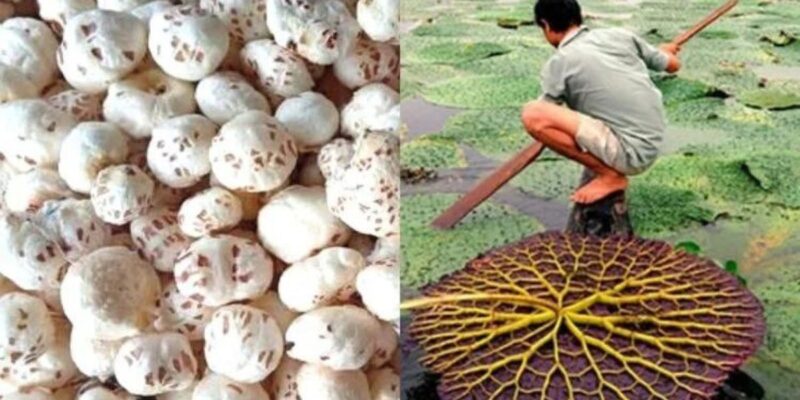
Makhana, also known as fox nut, has been an integral part of Bihar’s food culture for decades. Traditionally grown in village ponds, it has long provided seasonal income to farmers, though with limited financial security. For many years, makhana cultivation remained restricted to local markets, with little scope for large-scale growth. That situation is now changing as rising demand for healthy food is giving this traditional crop a new identity.
Across India and international markets, makhana is gaining popularity as a nutritious snack. This growing demand is gradually transforming it into a significant source of employment and entrepreneurship in Bihar. From rural ponds to modern processing units, the makhana sector is witnessing a shift that is reshaping the economic prospects of farming communities.
Growing Demand Brings New Life to a Traditional Crop
Health-conscious consumers are increasingly choosing makhana due to its nutritional value. Its low fat content and high protein appeal to urban buyers and global markets alike. This change in consumption patterns has increased its commercial importance. What was once seen as a regional product is now emerging as a national and export-oriented commodity.
Experts believe Bihar holds a natural advantage in makhana cultivation due to its climate and water-rich regions. However, the sector faced challenges related to processing, pricing, and market access. Addressing these gaps required innovation, investment, and a structured approach to value addition.
Young Entrepreneur Drives Change From Katihar
A key role in this transformation has been played by Gulfraz, a young entrepreneur from Katihar. He began his journey in 2019 with limited resources but a clear objective. His vision was to connect Bihar’s local makhana farmers with national and global markets through modern systems.
Inspired by initiatives such as Vocal for Local and Startup India, along with the Bihar government’s development focus, Gulfraz worked toward building a transparent and farmer-friendly supply chain. Over time, his efforts gained recognition, and his initiative became known as the Modi Makhana brand. What started on a small scale has now developed into a structured enterprise supporting both farmers and workers.
Modern Processing Improves Quality and Market Reach
One of the major changes introduced under this initiative is the use of modern processing technology. The National Makhana Industry processing unit operates in a facility spread across more than 7,000 square feet. Here, makhana is cleaned, graded, and packed using a combination of advanced machines and manual techniques.
This system ensures better hygiene and uniform quality, making the product suitable for national distribution and exports. Improved processing standards have strengthened buyer confidence and enhanced the reputation of Bihar’s makhana. As quality improves, farmers receive better prices for their produce, creating a direct link between effort and income.
Direct Procurement Strengthens Farmer Income
Another significant shift has been the introduction of direct purchasing from farmers. By eliminating middlemen, farmers are now able to receive fair prices for their crop. This approach has helped stabilize incomes and reduce exploitation, which was a common concern earlier.
The growing makhana industry has also created employment beyond farming. Jobs have emerged in processing units, transportation, packaging, and logistics. Local youth are finding opportunities close to home, reducing migration pressures and strengthening rural economies.
Youth Encouraged to Explore New Roles
Gulfraz believes that makhana offers immense potential for young people. He encourages them to look beyond cultivation and explore areas such as processing, branding, and exports. According to industry observers, value addition is key to long-term growth, and youth-driven entrepreneurship can accelerate this process.
Branding and packaging have become essential tools in reaching premium markets. With better presentation and quality assurance, makhana products from Bihar are gaining acceptance across diverse consumer segments. Digital platforms are further helping in expanding reach and building market visibility.
Government Support Boosts Sector Growth
The Bihar government is actively supporting the expansion of makhana cultivation. Through the Agriculture Department, subsidies are being provided to farmers under the area expansion scheme. Applications can be submitted online, making the process more accessible and transparent.
Farmers registered on the DBT portal are eligible for support. The scheme currently covers sixteen districts, including Katihar, Darbhanga, Madhubani, and Muzaffarpur. The unit cost has been fixed at Rs 0.97 lakh per hectare, covering expenses related to seeds, inputs, and harvesting. This assistance has reduced financial risk and encouraged wider participation.
Rising Presence in National and Global Markets
With increasing awareness of makhana’s health benefits, demand continues to grow in domestic and international markets. Retail chains and online platforms are showing greater interest in sourcing quality products. Export opportunities are also expanding as processing standards improve.
Experts suggest that with sustained focus on branding and infrastructure, Bihar could emerge as a major hub for makhana production and export. Consistent quality and supply will be crucial in maintaining long-term market relationships.
Traditional Farming Meets Modern Enterprise
The journey of makhana from village ponds to global plates reflects a larger transformation taking place in rural Bihar. Traditional farming practices are being combined with modern business ideas and government support. Farmers are gradually becoming stakeholders in a growing industry rather than just raw material suppliers.
Gulfraz’s initiative highlights how local resources can generate global opportunities. With continued innovation and collaboration, makhana is set to play a key role in creating jobs, increasing income, and shaping a stronger economic future for Bihar.
Share this:
- Click to share on WhatsApp (Opens in new window) WhatsApp
- Click to share on Facebook (Opens in new window) Facebook
- Click to share on Threads (Opens in new window) Threads
- Click to share on Reddit (Opens in new window) Reddit
- Click to share on Telegram (Opens in new window) Telegram
- Click to share on X (Opens in new window) X
- Click to share on LinkedIn (Opens in new window) LinkedIn