

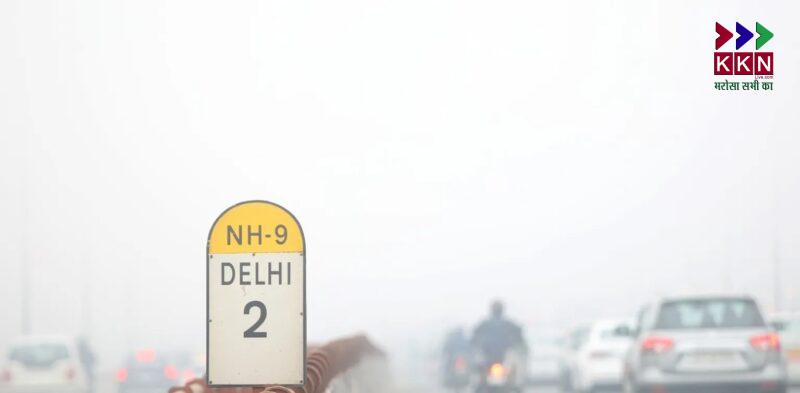
The air quality in Delhi and the entire National Capital Region (NCR) has reached alarming levels, severely affecting daily life. The toxic air, combined with dense fog and sluggish winds, has pushed pollution levels to hazardous levels in several areas. On Saturday, the Air Quality Index (AQI) in many parts of the region surpassed 400, causing widespread disruptions. More than 170 flights were canceled due to poor visibility, and traffic on the roads has been moving at a crawl.
Delhi’s Air Quality Reaches Hazardous Levels
Delhi’s air quality worsened significantly on Friday due to heavy fog, slow winds, and cloud cover, which led to a sharp rise in pollution levels. In many parts of the city, the AQI crossed the 400 mark, indicating a “severe” level of pollution. Even as of this morning, the city remains engulfed in thick fog, with AQI levels staying above 400 in several areas.
The overall AQI for Delhi stood at 384, categorizing the air quality as “very poor.” Other areas in the city such as Mundka, Vivek Vihar, and Jahangirpuri recorded severe pollution levels, with AQI readings as high as 437, marking a dangerous and unhealthy environment for residents. Other places, like Dwarka, Anand Vihar, and Punjabi Bagh, reported similar levels of hazardous air quality. Even Noida, Greater Noida, and Ghaziabad saw AQI values of over 350, which falls into the “very poor” category.
Impact of Dense Fog on Air Travel
The thick fog continues to affect visibility at Delhi’s Indira Gandhi International Airport, creating further travel disruptions. Airport authorities have issued an advisory asking passengers to check with their respective airlines for the latest updates. Despite the reduced visibility, flight operations are reportedly continuing as normal.
However, the impact of the fog was felt heavily on Friday, with 177 flights canceled at the airport. This included both domestic and international flights. Several other flights were delayed, causing significant inconvenience to travelers. The situation remains tense, with authorities closely monitoring the conditions throughout the day.
Traffic Struggles Amid Dense Fog
Dense fog and reduced visibility have severely affected road traffic in Delhi-NCR, with vehicles moving at a slow pace on the roads. Drivers have been forced to use fog lights to navigate through the thick mist, while train services at various railway stations have also been delayed. The combination of poor air quality and traffic congestion has caused frustration for commuters, making their daily journeys more difficult.
Government Steps to Tackle Air Pollution Crisis
In response to the growing pollution crisis, Union Minister for Environment, Forest and Climate Change Bhupender Yadav convened a high-level review meeting to address the worsening air quality situation in Delhi-NCR. The meeting included representatives from Delhi, Haryana, Uttar Pradesh, municipal authorities, and other relevant central agencies. During the meeting, the Minister expressed concern over the deteriorating air quality and announced that from January 2026, monthly reviews of action plans in Delhi-NCR would take place at the ministerial level.
Bhupender Yadav emphasized the need for better traffic management in the 62 most congested areas of Delhi-NCR. The government is also promoting the use of electric vehicles (EVs) and CNG buses in corporate and industrial units. Additionally, there is a push to introduce shift-based office timings to reduce traffic and air pollution during peak hours.
Increasing AQI Levels and Further Disruptions Expected
On Friday, the average AQI for the entire Delhi-NCR region was 374, which was slightly lower than the previous day’s reading. However, the number of areas with “severe” pollution levels increased. According to the Central Pollution Control Board (CPCB), 14 out of 40 air quality monitoring centers reported severe air quality, while 26 centers recorded “very poor” air quality.
Weather forecasts suggest that the AQI will remain in the “very poor” category throughout Saturday, with the potential to worsen further. On Sunday, the situation is expected to worsen even more, as several areas are predicted to experience a shift into the “severe” category.
No Immediate Relief from Pollution
Unfortunately, relief from the pollution crisis is not expected in the immediate future. Delhi continues to face multiple sources of pollution, and seasonal factors such as rainfall or strong winds, which could help disperse the pollutants, are not forecasted. The city’s air quality is likely to remain in the hazardous range until these conditions change, putting residents at risk of health complications.
The ongoing pollution crisis highlights the urgent need for sustainable solutions to improve air quality in the capital. As authorities continue to monitor the situation, it remains to be seen how effectively the city can combat this persistent environmental challenge.
As Delhi-NCR struggles with its worst air quality in years, the impact on daily life, health, and the economy is becoming increasingly severe. The region’s authorities, along with national agencies, must work swiftly to implement long-term measures that address the root causes of this environmental disaster. With no immediate relief in sight, the residents of Delhi and surrounding areas will continue to face the brunt of this toxic air crisis in the coming days.
The toxic air pollution in Delhi-NCR continues to disrupt daily life, with hazardous AQI levels reaching alarming numbers in many parts of the region. Flight cancellations, traffic congestion, and health risks are just a few of the challenges faced by residents. While the government has taken steps to address the situation, the lack of immediate weather relief means the pollution crisis is far from over. The focus now shifts to sustainable long-term solutions that can help mitigate the impact of pollution on this densely populated region.