
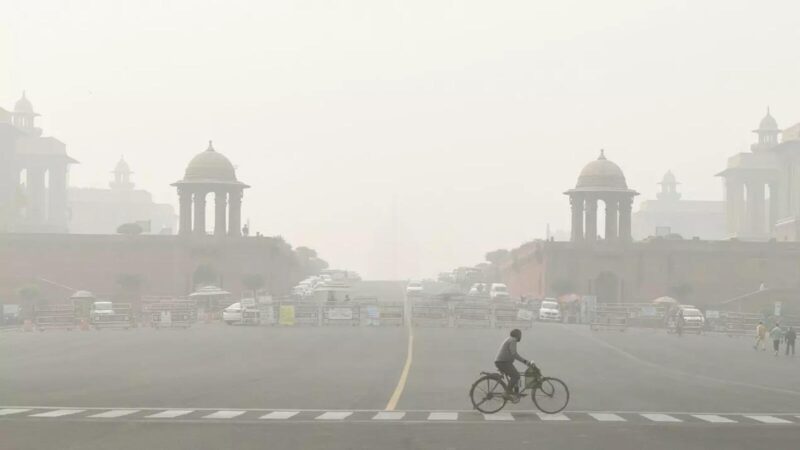
Delhi’s air quality has reached alarming levels, with the Air Quality Index (AQI) entering the ‘severe’ category this week. The increasing pollution levels have raised concerns among residents and authorities alike. In response to this critical situation, the Delhi government has introduced a series of stringent measures aimed at reducing pollution and improving air quality. These measures will come into effect starting Thursday and include a mandatory 50% work-from-home policy, restrictions on vehicles carrying construction materials, and the enforcement of Pollution Under Control (PUC) certificates.
Stringent Measures to Combat Pollution
Starting Thursday, several key measures will be implemented in Delhi to address the worsening air quality. These actions include a significant reduction in the number of employees working in offices, stricter regulations on fuel distribution, and a ban on vehicles transporting construction materials. These measures are in addition to the restrictions already announced under the Graded Response Action Plan (GRAP)-4 guidelines. The pollution crisis has been escalating since December 13, when the AQI consistently remained in the ‘severe’ category for three consecutive days.
Work From Home Mandate
As part of the measures, Delhi’s Labor Minister, Kapil Mishra, announced that both government and private institutions must follow a 50% work-from-home policy. This directive mandates that no more than half of the employees in an office should be physically present at work, with the rest working remotely from home. However, essential and emergency services, such as healthcare workers, fire department personnel, and other critical staff, are exempt from this rule. This directive also includes frontline workers involved in the fight against air pollution.
Impact on Construction Workers
Another key aspect of the new measures focuses on workers in the construction industry. Due to restrictions on construction activities, workers affected by the ban will receive financial compensation. The Delhi government will provide a ₹10,000 relief package to construction workers for the duration of the GRAP IV restrictions. This initiative aims to mitigate the financial impact on daily wage workers and ensure they are supported during this period of heightened restrictions.
PUC Certificate Requirement for Fuel
One of the most notable changes that will be enforced is the requirement for a valid Pollution Under Control (PUC) certificate to purchase fuel. Starting Thursday, vehicles without a PUC certificate will be denied access to petrol stations across Delhi. The government has ramped up its crackdown on vehicles that contribute to pollution. This move aims to ensure that only vehicles that meet emission standards are allowed to operate in the city.
What is a PUC Certificate?
A PUC certificate, which stands for Pollution Under Control certificate, is issued after a basic emission test is conducted on vehicles at authorized PUC centers. In Delhi, the certificate is required for vehicles to ensure they comply with emission standards. For two-wheelers and three-wheelers, the cost of the PUC certificate is ₹60, while for four-wheelers, it costs ₹80. Diesel-powered vehicles require a PUC certificate at a rate of ₹100. This certificate is valid for 12 months, provided the vehicle adheres to Bharat Stage IV and Bharat Stage VI emission standards.
Ban on Construction Material Transport Vehicles
The Delhi government has also introduced a ban on vehicles transporting construction materials. Environmental Minister Manjinder Singh Sirsa stated that vehicles carrying construction materials will no longer be allowed to enter Delhi starting Thursday. The government has urged drivers to use vehicles that comply with the BS-6 (Bharat Stage 6) emission standards to minimize pollution.
BS-6 Vehicles and Entry Restrictions
In line with efforts to curb pollution, the Delhi government has also announced a ban on vehicles that do not meet the BS-6 emission standards. All vehicles that fall below the BS-6 category, including those registered outside Delhi, will be prohibited from entering the city under GRAP-3 and GRAP-4 guidelines. This measure, which takes effect on Thursday, is aimed at reducing the number of highly polluting vehicles on the road.
Preparations for Enforcement
To ensure the smooth implementation of these measures, Delhi’s traffic police and transport enforcement teams have been deployed at key entry points to the city. Enforcement teams have been stationed at tolls and major intersections, including Kundli, Rajokri, Tikri, Aaya Nagar, Kalindi Kunj, and Mandoli, among others. This strategic deployment aims to ensure strict enforcement of the entry restrictions and ensure that vehicles without a valid PUC certificate do not receive fuel.
With Delhi’s air quality in a state of crisis, these strict measures are crucial in the fight against pollution. The Delhi government’s decision to implement work-from-home policies, restrict fuel access for non-compliant vehicles, and ban construction material transport vehicles is a proactive approach to reduce harmful emissions and improve the city’s air quality. However, the success of these measures will largely depend on their effective implementation and cooperation from residents and institutions alike. As Delhi continues to grapple with severe pollution levels, it remains essential for all sectors to collaborate in reducing emissions and protecting public health.