

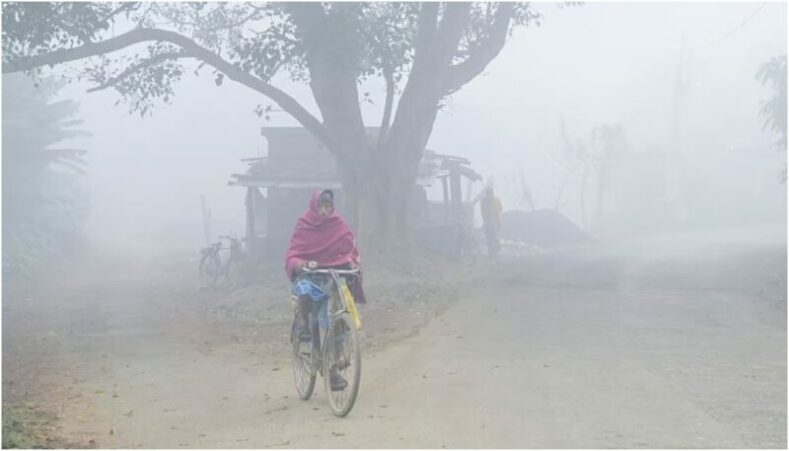
Severe winter conditions continue to affect large parts of Bihar, with cold waves, dense fog, and chilling winds disrupting daily life. According to weather officials, there is little chance of relief from the intense cold over the next one week. Several districts are witnessing harsh cold-day conditions, while visibility levels have dropped sharply in many areas, especially during morning and evening hours.
Cold Wave Intensifies Across Bihar
The bone-chilling cold has tightened its grip across the state due to icy winds blowing from the Himalayan region. Persistent north-westerly winds have further increased the chill factor, making outdoor movement difficult. In many regions, people are experiencing extreme discomfort as temperatures continue to remain well below normal levels. The impact of the cold wave is being felt both in urban centers and rural pockets, affecting normal routines.
Weather experts state that the combination of low temperatures and reduced sunlight has worsened cold-day conditions. Several areas are witnessing prolonged spells of fog, resulting in limited sunshine even during daytime hours. This has intensified the sense of cold across the state.
Orange Alert Issued for 32 Districts
The Meteorological Centre has issued an orange alert for 32 districts of Bihar, warning residents about cold-day conditions and dense fog. Morning and evening hours are expected to be the most challenging, as fog cover may become extremely thick. Visibility during these hours may drop drastically, in some places reaching as low as 10 meters.
The alert includes districts such as West Champaran, East Champaran and several others across north and central Bihar. Weather officials have advised people to remain cautious while traveling, especially during early hours.
Patna and Other Cities Record Low Temperatures
The capital city Patna has also been severely affected by the cold spell. The minimum temperature in Patna was recorded at 5.9 degrees Celsius, making it one of the coldest days of the season so far. Dense fog in the city significantly reduced visibility, causing inconvenience to commuters until late morning.
Among all districts, Banka reported the lowest temperature at 5.5 degrees Celsius, which is the lowest recorded temperature in the state this season. In total, at least 16 districts recorded minimum temperatures below 7 degrees Celsius over the last 24 hours.
Dense Fog Reduces Visibility
Fog has emerged as a major concern across Bihar, especially in northern and northeastern districts. In many places, visibility dropped to nearly 40 meters, causing serious disruptions in road traffic. Morning commuters faced difficulties until around 10 am, as thick fog continued to blanket highways and local roads.
Districts like Sitamarhi, Madhubani, Kishanganj, Supaul, Araria, Purnia, Katihar and Madhepura are likely to experience extremely low visibility due to dense fog conditions.
Cold-Day Warning for Several Regions
Meteorological officials have warned that cold-day conditions will persist on January 10 as well. Northern and south-western parts of Bihar are under cold-day alert, while north-western and north-central regions may continue to experience dense fog. The absence of adequate sunlight and low wind speed during daytime hours may further intensify the cold.
Health experts advise residents, especially children and elderly people, to avoid prolonged exposure to cold conditions. The chilling winds combined with low temperatures increase the risk of cold-related illnesses, including respiratory issues.
No Relief Expected for the Next Week
The weather department has clearly indicated that there is no immediate relief from the ongoing cold wave. For the next seven days, Bihar is expected to remain under the influence of severe winter conditions. Although a slight improvement may be seen after this period, temperatures are likely to rise gradually and not abruptly.
Until then, residents are advised to take precautionary measures, limit outdoor activities during foggy hours, and remain alert while commuting. The administration has also been asked to remain prepared to deal with emergencies related to extreme cold and low visibility.