

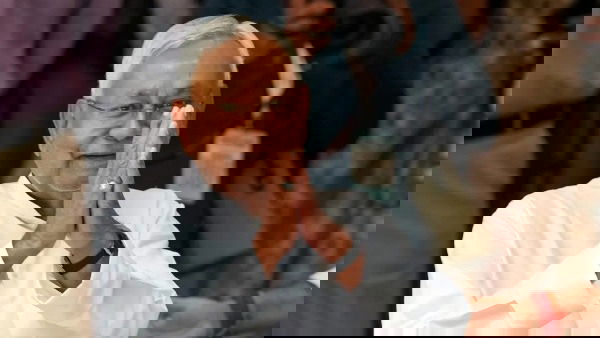
The winter session of the Bihar Vidhan Sabha is currently underway, with today marking the fourth day of proceedings. On this day, Narendra Narayan Yadav has been elected as the Deputy Speaker of the Bihar Legislative Assembly. The election process took place in the presence of Chief Minister Nitish Kumar, where Yadav was elected unopposed. His nomination was supported by Deputy Chief Minister Samrat Choudhary, while the Water Resources Minister, Vijay Kumar Choudhary, acted as the proposer. This marks Yadav’s second term as the Deputy Speaker, making him only the second person to hold this position consecutively.
Key Political Developments in Bihar Assembly
Earlier this week, Bihar Assembly Speaker Prem Kumar acknowledged Chief Minister Nitish Kumar as the leader of the house. Additionally, the Speaker gave recognition to senior RJD leader Tejashwi Prasad Yadav as the Leader of the Opposition in the Assembly. These announcements were made following the Governor’s address in the legislative session. The recognition of political leaders and their roles is a crucial step in organizing the session and ensuring the smooth conduct of legislative proceedings.
Legislative Council Operations and Appointments
In the Legislative Council, Chairman Awadhesh Narayan Singh appointed four presiding members to help manage the house’s operations. Dr. Sanjeev Kumar Singh, Prof. Nawal Kishore Yadav, Dr. Madan Mohan Jha, and Maheshwar Singh have been appointed to oversee the proceedings when both the Chairman and Deputy Chairman are absent. These presiding members play a vital role in maintaining order and facilitating smooth functioning in the Council.
Bihar’s Progress in Agriculture and Infrastructure
During his address in the Bihar Vidhan Sabha, Chief Minister Nitish Kumar spoke about the significant strides Bihar has made in the agricultural sector. He highlighted the success of the state’s agricultural roadmap, which was introduced in 2008. The roadmap has contributed to a substantial increase in the production of grains, fruits, vegetables, eggs, meat, and fish. Bihar has become self-sufficient in fish production, and farmers’ incomes have seen a notable rise. The current focus is on the implementation of the Fourth Agricultural Roadmap, which is driving accelerated progress in the state’s agriculture.
In addition to agriculture, Chief Minister Nitish Kumar also discussed the advancements made in the state’s infrastructure. The construction of new medical colleges has been fast-tracked, and significant work has been done on the state’s road network. Bihar has successfully met its goal of ensuring that even the most distant regions of the state can reach Patna within six hours. The development of roads, flyovers, and bypasses has significantly reduced travel time, and there are plans to further enhance connectivity with the construction of five new expressways.
Improvements in Education and Healthcare Sectors
Chief Minister Nitish Kumar also pointed out the progress made in the education and healthcare sectors. The number of government teachers in Bihar has now reached 520,000, reflecting the state’s commitment to improving its education system. The state has opened numerous new schools, hired a significant number of teachers, and introduced programs like the school uniform scheme for students. Moreover, the Bihar Public Service Commission (BPSC) has recruited over 258,000 government teachers. The state government has also provided multiple opportunities for teachers to take exams and become part of the government workforce.
In healthcare, there has been a remarkable improvement in the state’s health services. Before 2006, primary health centers in Bihar saw very few patients, with just 29 patients visiting per month. Since then, the government has ensured free medicines and treatments in hospitals. Today, primary health centers receive an average of 11,600 patients per day, a significant improvement in healthcare access for the people of Bihar.
Progress on Social Welfare Schemes and Budget Allocations
The Chief Minister also discussed the state’s various social welfare initiatives. The state government has allocated substantial funds for schemes aimed at empowering women, including the Chief Minister’s Women Employment Scheme, which has been allocated ₹21,000 crore. Additionally, the state will spend ₹6,462 crore on providing 125 free units of electricity to consumers. Other notable budgetary allocations include ₹1,886 crore for pensions to the elderly, and ₹800 crore for the Student Credit Card scheme.
In the overall education sector, a total of ₹1,548 crore in central share and ₹4,197 crore in state share has been earmarked for the improvement of education in Bihar. These budgetary provisions are crucial to sustaining the state’s growth trajectory and ensuring the welfare of its citizens.
Development of Roads and Infrastructure Projects
Chief Minister Nitish Kumar also touched upon the significant development in Bihar’s road and transport infrastructure. The construction of roads, bridges, and elevated roads has been a major focus of the state government. The Chief Minister emphasized that the goal of reducing travel time to Patna from the most remote regions to under six hours has been successfully achieved. The development of bypass roads, flyovers, and elevated roads has made it easier for people to travel to Patna from far-flung areas.
The government plans to continue this work by building five new expressways to further improve connectivity and infrastructure across Bihar.
Bihar Assembly and Legislative Council Updates
The Bihar Legislative Assembly also saw discussions on key bills during the session. On Wednesday, a supplementary budget of ₹91,717 crore was presented in the Assembly. The budget includes allocations for various welfare schemes, including significant amounts for women’s employment, electricity subsidies, and pension schemes.
In addition, the Speaker of the Assembly, Prem Kumar, announced that the state has received the Governor’s approval for 11 bills. These include the Bihar Hindu Religious Trust Bill, the Bihar Agricultural Land (Conversion for Non-Agricultural Purposes) (Amendment) Bill, and the Bihar Special Survey and Settlement (Amendment) Bill. These legislative actions are part of ongoing efforts to streamline governance and address the state’s administrative needs.
Looking Ahead: Future Legislative Developments
Looking ahead, the winter session of the Bihar Vidhan Sabha will continue to focus on the development of key legislative measures and social welfare programs. With the active participation of lawmakers and the continued support of the state government, Bihar is poised to make further strides in various sectors such as education, healthcare, infrastructure, and social welfare.
As the session progresses, members of the legislative body will continue to deliberate on important policies and legislative proposals that will shape the future of Bihar. These discussions, along with the various developmental initiatives announced by the government, highlight the state’s commitment to progress and the welfare of its citizens.
Share this:
- Click to share on WhatsApp (Opens in new window) WhatsApp
- Click to share on Facebook (Opens in new window) Facebook
- Click to share on Threads (Opens in new window) Threads
- Click to share on Reddit (Opens in new window) Reddit
- Click to share on Telegram (Opens in new window) Telegram
- Click to share on X (Opens in new window) X
- Click to share on LinkedIn (Opens in new window) LinkedIn