
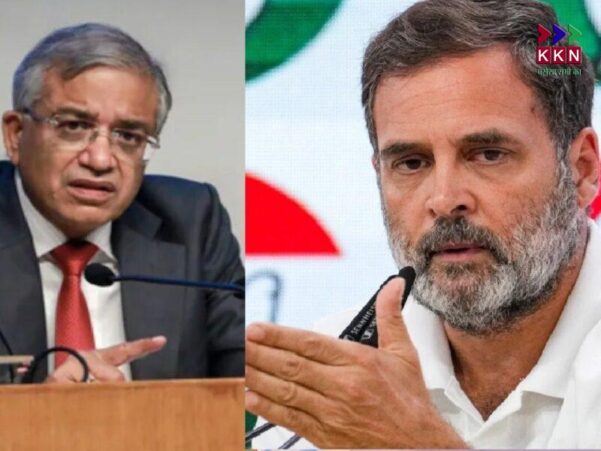
Rahul Gandhi, the Leader of the Opposition in the Lok Sabha, has filed a petition in the Supreme Court against the Election Commission of India. The petition challenges the Special Intensive Revision (SIR) of electoral rolls. It raises allegations of large-scale voter deletions and irregularities in the revision process. The petition also seeks a stay on SIR and the resignation of Chief Election Commissioner Gyanesh Kumar.
The petition was filed on Monday evening, October 12, following a communication from Chief Justice of India (CJI) Justice Surya Kant. Rahul Gandhi and Congress president Mallikarjun Kharge had earlier sought a meeting with the Chief Justice. They wanted to present their concerns about the Election Commission and request judicial intervention.
According to the details provided, Justice Surya Kant declined their request for a meeting. He advised the opposition leaders to approach the court through the appropriate judicial process. Following this advice, Rahul Gandhi and other INDIA alliance leaders moved the Supreme Court.
The petition raises questions about the conduct of the electoral roll revision process. Opposition leaders have alleged that the exercise could lead to the removal of eligible voters. They have also raised concerns about the functioning of the Election Commission.
Rahul Gandhi’s Petition Raises Concerns Over SIR
The Special Intensive Revision of electoral rolls has become a major point of political contention. Opposition leaders have questioned the process and raised allegations of voter deletions. They have described their concerns in terms of alleged “vote theft”.
The petition seeks judicial intervention in the ongoing revision exercise. It asks the Supreme Court to stay the SIR process. It also raises serious allegations against Chief Election Commissioner Gyanesh Kumar.
The opposition leaders have questioned the Election Commission’s handling of the revision process. They have demanded accountability over the alleged irregularities. The petition also seeks the resignation of Gyanesh Kumar from his position.
However, these allegations represent the petitioners’ claims. Their filing does not establish that electoral fraud or unlawful voter deletions have occurred. The allegations will require consideration through the appropriate legal process.
The petition names the Election Commission of India as a respondent. It also names Chief Election Commissioner Gyanesh Kumar and Election Commissioners Sukhbir Singh Sandhu and Vivek Joshi.
The move brings the dispute over electoral roll revision before the Supreme Court. The court’s consideration will be important in determining the legal issues raised by the petition.
Eleven INDIA Alliance Leaders Sign Public Interest Petition
The petition is a public interest litigation (PIL) signed by 11 leaders from the INDIA opposition alliance. Rahul Gandhi is among the signatories. Congress president Mallikarjun Kharge has also signed the petition.
Other signatories include Samajwadi Party president Akhilesh Yadav and RJD leader Tejashwi Yadav. Trinamool Congress leader Sougata Roy is also among the leaders who signed it.
The list further includes Shiv Sena leader Sanjay Raut and CPI(M) general secretary M.A. Baby. CPI leader D Raja has also signed the petition.
JMM MP Mahua Maji is another signatory. Congress leader Supriya Sule and E.T. Mohammed Shabir are also named among the petitioners.
The participation of leaders from several opposition parties gives the petition a broader political dimension. It reflects the INDIA alliance’s collective concerns about the electoral roll revision process.
The alliance leaders have questioned the transparency and fairness of SIR. They have raised concerns about the potential impact on voters. Their petition seeks judicial intervention in the matter.
The legal challenge also places the Election Commission’s role under scrutiny. The petitioners want the court to examine the issues raised against the poll body. They have requested relief concerning the continuation of SIR.
Opposition Demands Gyanesh Kumar’s Resignation
A key demand in the petition concerns Chief Election Commissioner Gyanesh Kumar. The opposition leaders have sought his resignation. They have also raised allegations concerning his role in the electoral roll revision exercise.
The petition names Gyanesh Kumar alongside the Election Commission of India. Election Commissioners Sukhbir Singh Sandhu and Vivek Joshi have also been named as respondents.
The petitioners argue that the SIR process requires judicial scrutiny. Their allegations concern the removal of names from electoral rolls. They have questioned whether the process could affect eligible voters.
The demand for Gyanesh Kumar’s resignation adds a significant political element to the legal challenge. It places the conduct of the country’s top election official at the centre of the dispute.
However, the petition’s demands should not be treated as established findings. The allegations against the Chief Election Commissioner remain claims made by the petitioners. Their legal merits will depend on the proceedings and the evidence considered by the court.
The Supreme Court’s role will be to examine the legal questions presented before it. The filing itself does not mean that the court has accepted the allegations. Nor does it establish that the requested relief will be granted.
Chief Justice Surya Kant Advises Opposition Leaders to Approach the Court
Before filing the petition, Rahul Gandhi and Mallikarjun Kharge had sought an appointment with Chief Justice of India Justice Surya Kant.
The Congress leaders had written to the Chief Justice. They wanted to explain their concerns about the Election Commission. They also sought his intervention regarding the issues raised in their communication.
Justice Surya Kant declined their request for a meeting. In his reply, he explained the limits of the Supreme Court’s administrative authority.
The Chief Justice stated that the Supreme Court did not have administrative powers to address the issues raised in their letter. He also advised the opposition leaders to use the court’s judicial powers.
His response suggested that the leaders should approach the court through a formal legal procedure. Instead of submitting a memorandum, they could seek relief under Article 32 of the Constitution.
Article 32 provides a constitutional remedy for enforcing fundamental rights. It allows individuals to approach the Supreme Court in appropriate cases. The provision forms an important part of the constitutional framework for protecting fundamental rights.
The advice from the Chief Justice was followed by the filing of the petition. Rahul Gandhi and the other opposition leaders have now sought judicial intervention over SIR.
The development marks a shift from a request for a meeting to a formal legal challenge. It also brings the opposition’s concerns before the court through judicial proceedings.
Article 32 and the Supreme Court’s Role
Article 32 of the Indian Constitution allows people to approach the Supreme Court for the enforcement of fundamental rights. It empowers the court to issue appropriate directions, orders, or writs.
The provision is a key constitutional safeguard. It enables the Supreme Court to examine claims involving violations of fundamental rights. However, the court must consider each case according to its legal merits.
The opposition leaders’ petition seeks to use this judicial route. Their concerns relate to alleged irregularities in electoral roll revision. They want the court to examine the process and provide appropriate relief.
The petition’s demands include a stay on SIR. It also seeks action concerning Chief Election Commissioner Gyanesh Kumar.
The court will have to consider the issues presented before it under the applicable legal framework. The filing of a petition does not automatically suspend the process being challenged. A stay would depend on the court’s order.
This distinction is important in understanding the latest development. The opposition has requested judicial intervention, but the requested relief should not be confused with an order already granted by the court.
Supreme Court Already Hearing a Related Petition
The latest petition comes amid existing proceedings concerning the Special Intensive Revision of electoral rolls. According to the information provided, a similar petition is already pending before the Supreme Court.
The earlier case is also under judicial consideration. The filing of the latest petition therefore adds another development to the ongoing legal debate over SIR.
The relationship between the petitions may become relevant during the proceedings. The court may need to consider the issues raised in the latest filing alongside the existing case.
The central questions concern the electoral roll revision process. The opposition has alleged large-scale voter deletions and irregularities. It has asked the court to intervene and halt the exercise.
The Election Commission’s position and the legal grounds presented by all parties will be important to the proceedings. The court’s assessment will determine how the issues are addressed under the law.
At this stage, the petition should be understood as a formal challenge. The filing does not establish the allegations as facts. The outcome will depend on the judicial process.
Electoral Roll Revision Becomes a Major Political Issue
The controversy over SIR has intensified the political dispute between the opposition and the Election Commission. The opposition leaders have questioned the process and raised concerns about voter rights.
Their latest move seeks judicial scrutiny of the electoral roll revision exercise. It also targets the leadership of the Election Commission through the demand for Gyanesh Kumar’s resignation.
The involvement of leaders from 11 INDIA alliance parties gives the challenge wider political significance. It shows that the concerns raised in the petition extend beyond a single opposition party.
The dispute also highlights the importance of electoral rolls in the democratic process. Accurate voter lists are essential for ensuring that eligible citizens can participate in elections.
At the same time, allegations of irregularities require careful examination. Claims about voter deletions or electoral misconduct must be assessed through reliable evidence and established legal procedures.
The Supreme Court proceedings may provide a judicial forum for examining the concerns raised by the petitioners. The court’s response will be closely watched by political parties and observers.
The immediate focus remains on the relief sought by the opposition leaders. They want the SIR process stayed and have demanded Gyanesh Kumar’s resignation.
The petition now places these demands before the Supreme Court. The next stage will depend on the court’s consideration of the legal issues involved.
As the proceedings continue, the distinction between political allegations and judicial findings will remain important. The final outcome will depend on the court’s assessment of the case and the applicable constitutional provisions.
For now, Rahul Gandhi’s petition marks a significant development in the ongoing dispute over SIR. It brings the opposition alliance’s concerns about electoral roll revision into a formal judicial proceeding.