
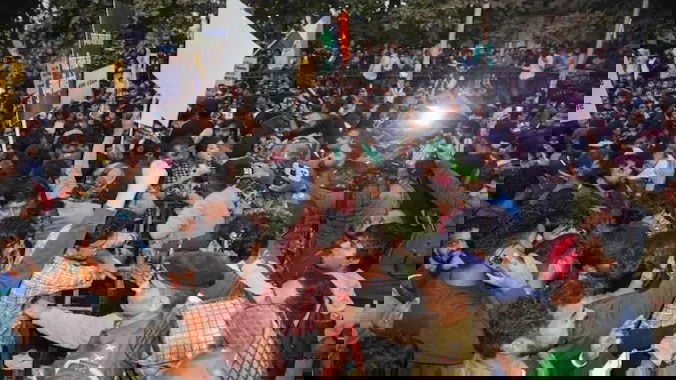
The University Grants Commission has introduced new regulations for higher education institutions in 2026, sparking a nationwide debate. The new rules mandate the formation of Equity Committees in every university and college. While the commission says the move aims to eliminate discrimination on campuses, the inclusion of the OBC category has drawn strong opposition from general category groups.
The University Grants Commission is the central body responsible for regulating higher education in India. It grants recognition to universities and colleges and can withdraw approval for violations. UGC also determines academic standards, faculty qualifications, and eligibility for government funding. The latest regulations, titled Promotion of Equity in Higher Education Institutions Regulations 2026, are being presented as a major reform to ensure equal treatment in academic spaces.
Key Provisions of the New UGC Regulations
Under the new framework, every higher education institution must establish an Equity Committee that will function as an Equal Opportunity Centre. Earlier rules allowed only SC and ST students to file complaints related to caste-based discrimination. The new regulations expand this right to include students, teachers, and staff from the OBC category as well.
UGC has described this change as a response to evolving realities on campuses. According to the commission, complaints of discrimination are not limited to any single group. By widening the scope, UGC believes the system will become more inclusive and effective.
The Equity Committee must include representatives from SC, ST, OBC, and women. Institutions are required to comply with this structure as part of their regulatory obligations. Failure to do so may attract action from the commission.
Time-Bound Complaint Redressal Mechanism
The new rules introduce a formal and time-bound complaint redressal process. Institutions must establish a helpline for receiving complaints related to discrimination. Once a complaint is received, action must begin within twenty-four hours.
The inquiry process must be completed within sixty days. If allegations are found to be true, the committee can recommend strict action. Penalties may include warnings, monetary fines, suspension, or expulsion, depending on the severity of the case.
UGC officials say this time-bound approach will prevent delays and ensure accountability. They argue that quicker resolution will help create safer academic environments.
Opposition From General Category Groups
The new regulations have faced strong resistance from general category groups. Protesters argue that the rules are biased and presume guilt even before an investigation is completed. Many have demanded that the regulations be rolled back or amended.
Critics fear that the provisions could be misused to file false complaints. They claim there are no clear safeguards to protect against malicious allegations. Concerns have also been raised about the absence of mandatory representation for the general category in Equity Committees.
Another major point of contention is the removal of provisions from the 2012 regulations that discouraged false complaints. Opponents argue that without such safeguards, students and staff from the general category may face unfair targeting, potentially damaging careers and reputations.
Supporters of the rules have rejected these claims. They argue that individuals who do not engage in discrimination should not fear the process. According to them, the regulations are necessary to protect marginalized groups and promote fairness.
Supreme Court Directions Behind the New Rules
The introduction of the new regulations follows directions from the Supreme Court. During hearings related to the cases of Rohith Vemula and Payal Tadvi, the court emphasized the need for stronger measures to prevent caste-based discrimination in educational institutions.
Both cases involved allegations of prolonged harassment, which ultimately led to suicide. Their mothers later filed public interest petitions seeking accountability and systemic reforms. In January 2025, the Supreme Court directed UGC to update the 2012 regulations and strengthen institutional mechanisms.
UGC released a draft version of the new rules in February 2025. After further review, the final regulations were notified in 2026.
Data Cited to Justify the New Framework
UGC has cited official data to support the need for new rules. According to a 2024 report, complaints related to discrimination have increased significantly over recent years. In 2019-20, 173 complaints were recorded, while the number rose to 378 in 2023-24.
Over a five-year period, a total of 1,160 complaints were registered, showing an increase of nearly 118 percent. UGC argues that the rising trend indicates gaps in the existing system.
However, critics point out that India has over 1,153 universities and more than 48,000 colleges, with over 4.2 crore students enrolled. They argue that the number of complaints remains small in proportion and question the need for sweeping changes.
Debate Continues Over Impact on Campuses
The controversy surrounding the UGC New Rules 2026 continues to grow. Students, faculty members, and administrators remain divided on the issue. Social media platforms have amplified the debate, with hashtags calling for rollback gaining traction.
UGC has maintained that the regulations are designed to ensure transparency and equity. The commission insists that institutions must adopt stronger mechanisms to address discrimination. As discussions continue, stakeholders are awaiting further clarification and possible intervention from the government.
Share this:
- Click to share on WhatsApp (Opens in new window) WhatsApp
- Click to share on Facebook (Opens in new window) Facebook
- Click to share on Threads (Opens in new window) Threads
- Click to share on Reddit (Opens in new window) Reddit
- Click to share on Telegram (Opens in new window) Telegram
- Click to share on X (Opens in new window) X
- Click to share on LinkedIn (Opens in new window) LinkedIn