
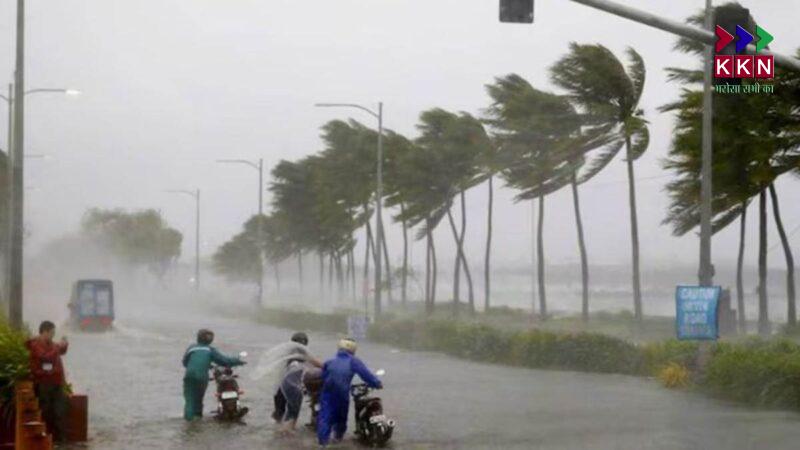
As Cyclone Ditwah continues to wreak havoc across the region, its impact has been severe in Sri Lanka, where the storm has caused widespread destruction, leading to the death of at least 123 people. With the cyclone now moving towards India, authorities have issued warnings of extremely heavy rainfall along the southeastern coastal regions. By the morning of November 30, the cyclone is expected to reach northern Tamil Nadu, Puducherry, and the adjoining southern Andhra Pradesh coasts, causing a significant weather disturbance.
Cyclone Ditwah’s Path and Impact on Sri Lanka
Cyclone Ditwah intensified as it moved north-westward, reaching the area near the northern coast of Sri Lanka. On November 29, the storm was situated approximately 80 kilometers east of Sri Lanka and about 380 kilometers south of Chennai, India. Meteorological reports indicate that Ditwah is expected to make landfall near the coasts of northern Tamil Nadu, Puducherry, and southern Andhra Pradesh by the morning of November 30.
Before reaching Indian shores, the cyclone caused catastrophic damage in Sri Lanka, where heavy rainfall and mudslides led to the loss of many lives. As of now, the death toll in Sri Lanka has reached 123, with over 130 people still reported as missing. According to the Disaster Management Center, around 44,000 people have been displaced, seeking refuge in temporary shelters across the country. The situation remains dire, with ongoing rescue operations and relief efforts. The death toll may continue to rise, as many areas affected by mudslides are still inaccessible, and authorities have not yet reached some of the most devastated regions.
Rainfall Warnings in India Due to Cyclone Ditwah
As Cyclone Ditwah moves closer to India, heavy rainfall is expected along the coastal areas of Tamil Nadu, Andhra Pradesh, and Puducherry. The India Meteorological Department (IMD) has issued a warning for extremely heavy rainfall in Tamil Nadu’s coastal regions and southern Andhra Pradesh from November 29 to December 2. These areas are likely to experience intense showers and strong winds as the cyclone moves further inland.
On November 30, heavy to very heavy rainfall is predicted in coastal Andhra Pradesh, including Yanam, Rayalaseema, and parts of southern Tamil Nadu. This will be followed by widespread heavy rainfall across the southern regions of the country, particularly in Tamil Nadu, coastal Andhra Pradesh, and parts of Telangana. According to forecasts, places such as Kerala and Mahé will also experience heavy downpours during this period.
Additionally, the IMD has issued a storm warning for the coastal areas, with a high likelihood of thunderstorms accompanied by lightning from November 29 to December 3. The conditions are expected to worsen during this time, with gusty winds and continuous rainfall, which could lead to flash floods and other weather-related hazards in vulnerable regions.
Chilly Weather Across Northern India Amid Cyclone’s Impact
While the cyclone brings heavy rain to southern parts of India, northern states are experiencing a cold wave. Temperatures have dipped significantly, with parts of Jammu & Kashmir, Ladakh, and Himachal Pradesh recording minimum temperatures below six degrees Celsius. In regions like Uttarakhand, Punjab, Haryana, Chandigarh, Delhi, and western Uttar Pradesh, temperatures have been hovering between 6-10 degrees Celsius.
Cold conditions are also prevailing in northern Rajasthan, eastern Uttar Pradesh, and eastern Madhya Pradesh. The temperature drop in these areas is likely to continue in the coming days, with winter conditions intensifying due to the impact of Cyclone Ditwah.
Sri Lanka’s Struggle with Cyclone Ditwah’s Aftermath
The destruction caused by Cyclone Ditwah in Sri Lanka has been overwhelming. The island nation has faced incessant rain, floods, and landslides since the storm began to intensify earlier in the week. Areas previously untouched by such weather phenomena have now been submerged under water, and the aftermath of the landslides has left several villages isolated. Despite ongoing relief efforts, many affected areas are still awaiting assistance.
The Sri Lankan government has been working closely with international organizations to provide aid to the affected population. Emergency shelters have been set up, but the crisis continues to unfold, with more regions likely to experience severe weather conditions in the coming days.
The cyclone’s devastating impact on Sri Lanka has prompted neighboring countries to remain on high alert as the storm moves toward India. With the potential for significant damage to coastal regions, the Indian authorities are working to mitigate the effects of the cyclone.
As Cyclone Ditwah continues to approach India, the government has urged citizens in the affected areas to remain cautious. Coastal residents have been advised to evacuate if necessary, and authorities are on high alert to manage the potential disaster. With heavy rainfall expected to cause flooding, and thunderstorms predicted to worsen the conditions, the coming days are critical.
In the wake of the cyclone’s devastation in Sri Lanka, the focus will be on preventing similar damage in India. Disaster management teams are on standby, and the public is urged to stay informed through official channels. As the cyclone progresses, the situation will continue to be monitored closely, and updates will be issued to ensure the safety of the population in the impacted regions.